
Armadillo Removal in Brevard & Orange County, FL
Armadillo tearing up the lawn? We trap along burrows and travel routes — not open-yard bait traps that usually fail — then exclude burrows near foundations.
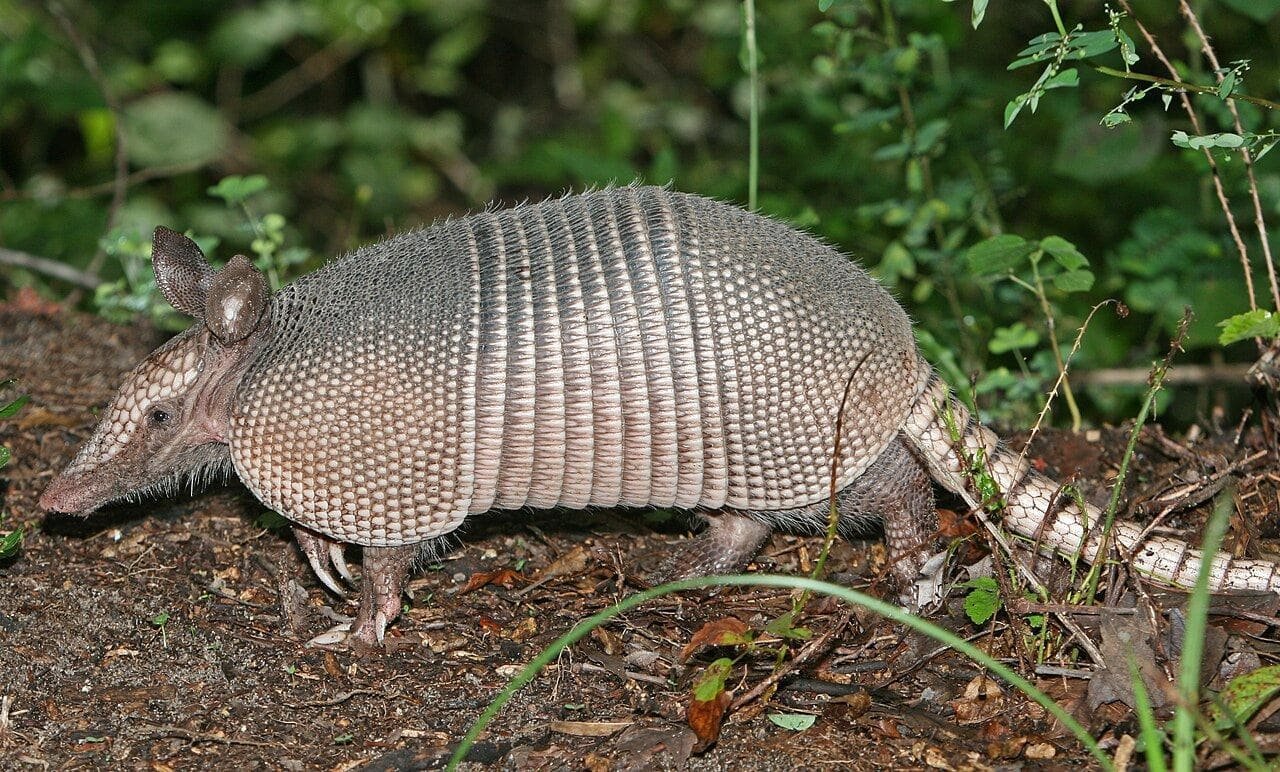
Armadillos don't invade attics; they root for grubs overnight and leave cone-shaped holes across turf and beds. DIY bait trapping has a low success rate because they aren't food-motivated like raccoons.
When grubs are the draw, we trap the animal and point you toward lawn treatment so the food source doesn't invite the next one.
Signs of a Armadillo Problem
- Cone-shaped 1–3 inch holes after rain across lawns and beds.
- Overturned mulch or shallow trenches along foundations.
- 7–8 inch burrow near a slab, woodpile, or brush.
- Night-only damage with no daytime animal seen.
- Patchy uprooted sod rather than one large dig.
Our Armadillo Removal Process
- Locate burrows and active foraging patterns.
- Set funnel traps on corridors and burrow mouths — not open lawn.
- Live trap and remove under Florida nuisance wildlife rules.
- Exclude burrows that threaten foundations or slabs.
- Refer grub treatment when soil insects are the attractant.
Florida Law & Compliance
Armadillos are non-native and unprotected in Florida, which allows flexible trapping timelines — success still depends on reading burrows and travel paths correctly. See FWC nuisance wildlife rules →
| Factor | Why It Matters |
|---|---|
| Number of entry points | More access points mean more exclusion material and labor time |
| Attic/roof accessibility | Steep, multi-story, or tile roofs require extra safety equipment |
| Presence of young/litter | Family removal takes extra time and a humane handling approach |
| Extent of damage | Insulation replacement, wiring repair referrals, and sanitation add scope |
| Recurring or unresolved activity | Prior incomplete exclusion elsewhere may require more extensive sealing |
Armadillo Removal FAQs
Why can't I catch the armadillo myself?
An armadillo is digging for grubs and worms in the soil. It is not looking for bait in a trap in the middle of the lawn. The sets that work follow the burrow and the travel line along a fence or a foundation. A baited cage in the grass usually sits empty while the yard keeps getting torn up.
Will killing grubs stop the damage?
It lowers the reason to dig. It does not remove an armadillo that is already denning under the shed or working the block every night. If both are true, we trap the animal and you still deal with the grubs. One without the other is half a job.
Are armadillos dangerous?
They are not aggressive. They can carry bacteria linked to leprosy, which is rare and not a reason to panic, and it is a reason not to pick one up. We do the handling. Armadillos are not in the rabies-vector group with raccoons, bats, foxes, and skunks.
Armadillo Removal by City
Looking for armadillo removal near you? Open your city page for local habitat notes and a phone estimate.
Need Armadillo Removal Now?
Call (321) 205-4972 — free phone estimate, same-visit written quote, licensed & insured.